
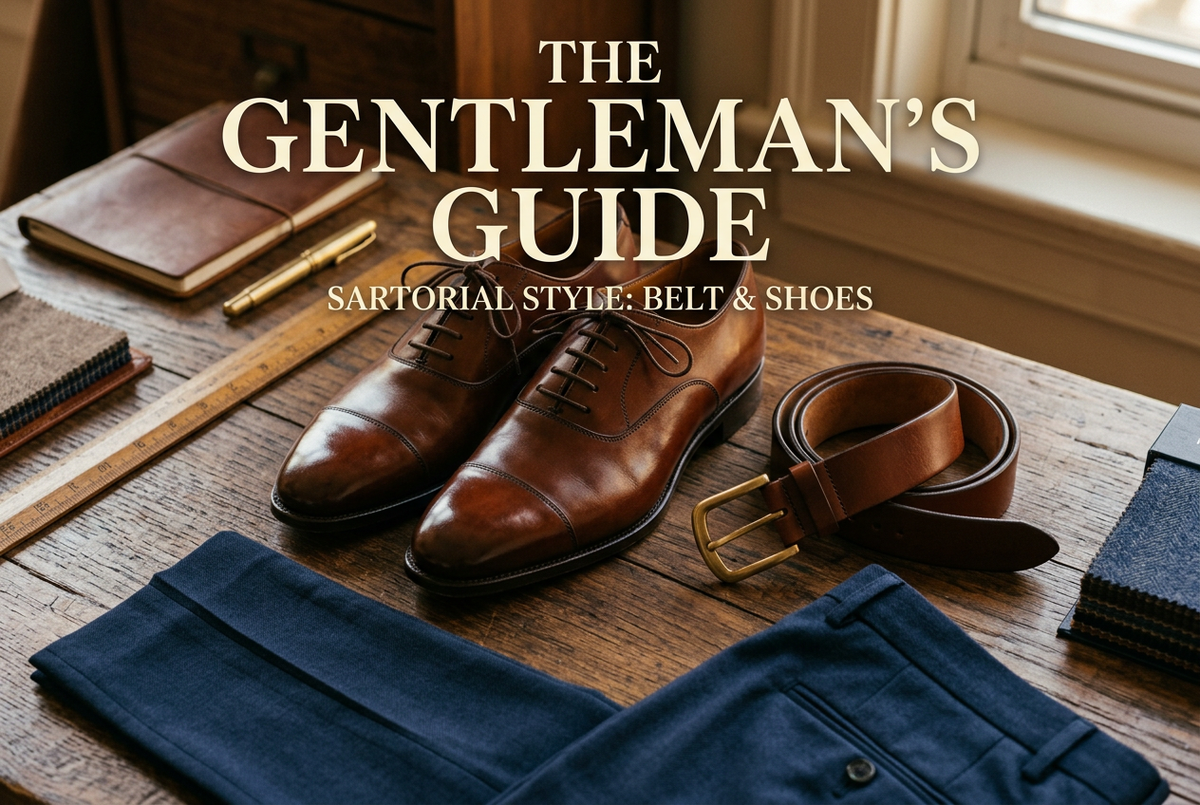
How to Match Your Belt and Shoes: The Rules, The Chart, and The Modern Exceptions
Matching your belt and shoes is the cornerstone of classic menswear. When done correctly, it brings seamless cohesion and polish to your tailoring. When done poorly—such as pairing a black dress belt with tan brogues—it immediately divides your silhouette and sabotages even the most expensive suit.

The 3 Golden Rules of Leather & Metal Matching
To achieve cohesive tailoring, your leather goods and metallic accents must operate under three fundamental guidelines.

Rule 1: Match the Color Tone (Strict for Black, Harmonious for Brown)
Black shoes demand an uncompromising black belt. Brown, however, exists across a rich spectrum—from light caramel and cognac to espresso and oxblood. For brown leathers, your belt and shoes do not have to be cloned from the exact same hide, but they must share the same warmth and depth family.
Rule 2: Match the Leather Finish and Texture
A high-shine polished calfskin Oxford shoe looks jarring when paired with a distressed casual belt. Match smooth dress leather with smooth leather, matte with matte, and suede with suede. Texture cohesion creates understated luxury.
Rule 3: Harmonize Your Metal Hardware
Pay attention to your belt buckle. A polished silver or nickel buckle harmonizes with stainless steel watch cases, silver cufflinks, and tie clips. A brass or gold buckle should correspond with yellow gold or warm metallic accessories. (Wedding bands are an exception and do not need to match).
The Definitive Suit, Shoe & Belt Matching Chart
Consult this foolproof master chart before dressing for weddings, business meetings, or evening galas:

The 4 Modern Exceptions: When You Break the Rules
While matching leathers is mandatory in conservative business environments, modern style icons embrace several notable exceptions:


Because suede absorbs light rather than reflecting it, trying to find a belt in the microscopic identical shade is unnecessary. Pairing chocolate suede loafers with a dark brown leather or woven belt looks intentionally sophisticated.
Golden Rule: Never wear a white belt with a suit. When rocking smart-casual white leather sneakers, wear trousers with side adjusters, or choose a neutral woven braided belt in navy or grey that ties back into your shirt or jacket.
A belt must never be worn with a tuxedo. Belts break the fluid vertical satin line of formal tailoring. Tuxedo trousers should never have belt loops; they are held up exclusively by side tab adjusters or hidden button-on silk suspenders (braces).
Many modern tailored trousers are cut without belt loops, featuring brass or silver side buckles. Going beltless creates a continuous, unbroken visual line from jacket to shoes that elongates your legs and flatters your torso.
Belt Dimensions: Getting the Width and Buckle Right
Even a perfectly color-matched belt will look wrong if the proportions are designed for denim:
- The Formal Width (1.25 inches): A dress belt for a suit must be exactly 1.25 inches (approx. 3 cm) wide. Belts that are 1.5 inches or wider are casual workwear belts intended for jeans and will stretch suit loops awkwardly.
- The Buckle Profile: Choose a slim, rectangular frame buckle with a polished or brushed finish. Avoid oversized Western buckles, heavy plaques, or bold brand logos.
- The Proper Length: When buckled, you should be using the middle (third) hole, leaving a discrete 2-inch tail to tuck into the first loop.
Frequently Asked Questions (FAQ)
1. Do my shoes and belt have to be the exact same shade of brown?
2. Can you wear a belt with a tuxedo or dinner jacket?
3. What color belt should you wear with white sneakers and a suit?
4. Does my belt buckle need to match my watch and cufflinks?
5. What is better for formal suiting: belts or suspenders (braces)?
Crafted For Clean Sartorial Lines
From tailored suit trousers cut with precision waistband details to classic three-piece sets and tuxedos, explore Aesido’s distinguished formalwear collection designed for modern gentlemen.